
Circular Electronics 101: The Other Circular Economy We Forget About
Why the devices in your drawer matter more than you think


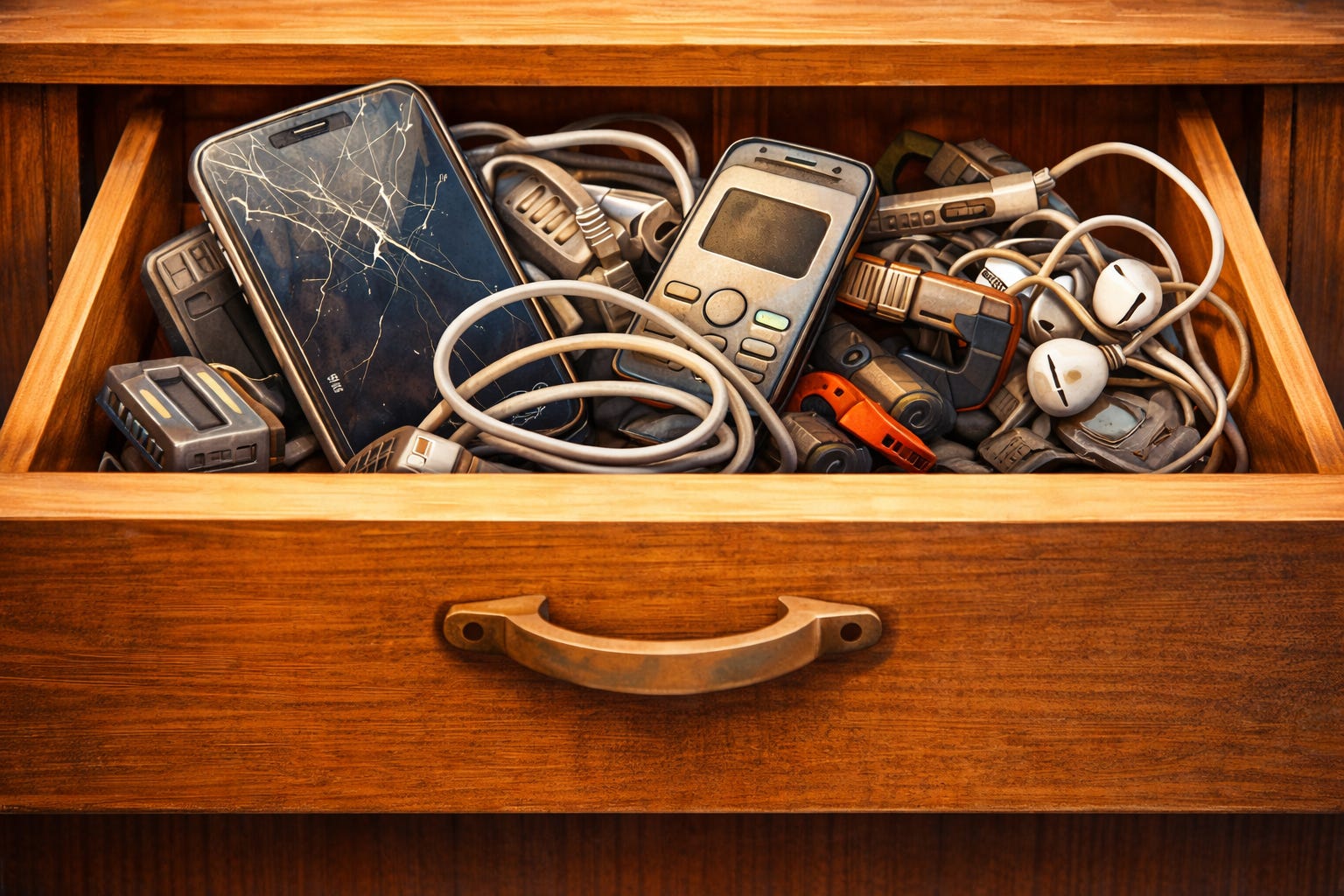
There’s a drawer in most homes that quietly tells a story.
Old phones you’re not ready to part with. A tangle of chargers that may or may not belong to anything you still own. Earbuds that stopped working but didn’t quite feel disposable.
Not trash. Not useful. Just..paused.
That drawer is where the electronics circular economy begins, whether we realize it or not.
When we think about the circular economy, the first thing that usually comes to mind is clothes.
Circular fashion feels familiar and tangible. We can see it, touch it, mend it, swap it, and give it a second life with our own hands.
But there’s another corner of our lives where circularity matters just as much, maybe even more, and yet we barely talk about it.
Consumer electronics.
Your phone. Your earbuds. Your laptop that only charges if the cable sits at just the right angle. The glass-and-metal rectangles that power our days and quietly pile up in drawers when we replace them.
Here’s the irony:
Unlike clothes, electronics are not DIY-friendly. You can’t sit down with a needle and thread and fix a circuit board.
Electronics need a different kind of circularity, one that is industrial, invisible, and deeply systemic.
This article is a simple, human-friendly introduction to how electronics currently move through our world, and how they could move if we embraced circularity.
1. Why Electronics Need Circularity
We replace our phones more often than our toothbrushes wear out.
In 2022 alone, the world discarded 62 million tonnes of electronic waste, heavier than the Great Wall of China. These devices power every moment of our modern life, but they come with a footprint most of us never see.
A. They contain rare and finite materials
Your smartphone contains 60+ different elements including cobalt, palladium, gold, silver, and rare earth metals. Some of these are scarcer than diamonds.
Mining these virgin materials is happening faster than nature can replenish them. It is energy-intensive, environmentally destructive, and often linked to unsafe labour conditions.
And here’s the uncomfortable fact:
In 2022, the raw materials locked inside global e-waste were worth $91 billion yet only about 22% was recovered.
We are quite literally throwing away a gold mine.
B. Manufacturing is where most emissions happen
Most of a smartphone’s climate impact occurs before it ever reaches your hands.
A single new smartphone generates roughly 85 kg of CO₂ in its first year (based on Apple lifecycle assessments), and around 95% of that comes from manufacturing—mining, refining, assembly, and global shipping.
By the time you unbox your phone and take your first photo, the environmental damage is already baked in.
C. Disposal is a growing global problem—and we make it worse
Electronics are the fastest-growing waste stream in the world.
Yet only about 22% of e-waste is formally collected and recycled. The rest? Mixed with trash, sitting in drawers, or shipped to developing countries where informal recyclers work in hazardous conditions.
And we, the consumers, unknowingly accelerate the cycle. We hold onto old phones indefinitely. We throw chargers into general waste. We upgrade every two years not because devices are broken, but because newer models exist.
Even small changes matter. Extending a phone’s life by just a few months significantly reduces its environmental footprint.
So yes, electronics desperately need circularity.
2. How Electronics Work Today: The Linear Value Chain
Most electronics today still follow a simple, one-way path:
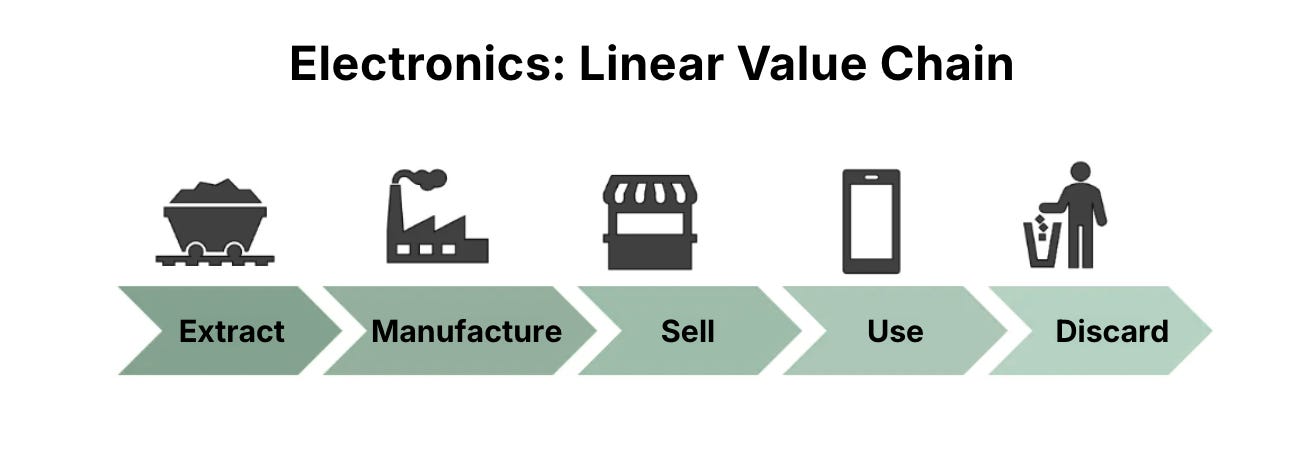
Let’s break that down.
Extract: Natural resources are mined—metals, plastics, minerals—often at high environmental and social cost.
Manufacture: Devices are assembled in global factories, usually glued together and optimised for performance and thinness, not repair. When a battery degrades, replacing the entire phone becomes the default option.
Sell: Products are pushed through retail, online marketplaces, and telecom plans that normalise “free” upgrades every 18–24 months.
Use: Devices are used for surprisingly short periods. The average smartphone lifespan is about 2.5 years, and nearly half of upgrades happen simply because a newer model is released.
Discard (or Drawer-Hoard): At end of life, devices are:
Thrown into landfills
Forgotten in drawers
Handed to informal recyclers
This linear model is built on a take–make–waste mindset, with constant extraction, constant production, and constant disposal.In India, smartphone shipments have grown rapidly over the past decade, and e-waste generation has climbed in parallel—yet formal collection infrastructure remains fragmented, with much of the recycling happening in the informal sector. In the UK, an estimated 40 million unused devices sit in homes—potential value locked in drawers.
Fast. Profitable. Unsustainable.
3. How Circular Electronics Work: A Different Way Forward
(Think less “new vs old” and more “first life, second life, third life.”)
What if electronics weren’t designed to be discarded?
What if the end of a device’s first life was simply the beginning of its second—or third?
Circular electronics reimagine every stage of the value chain.
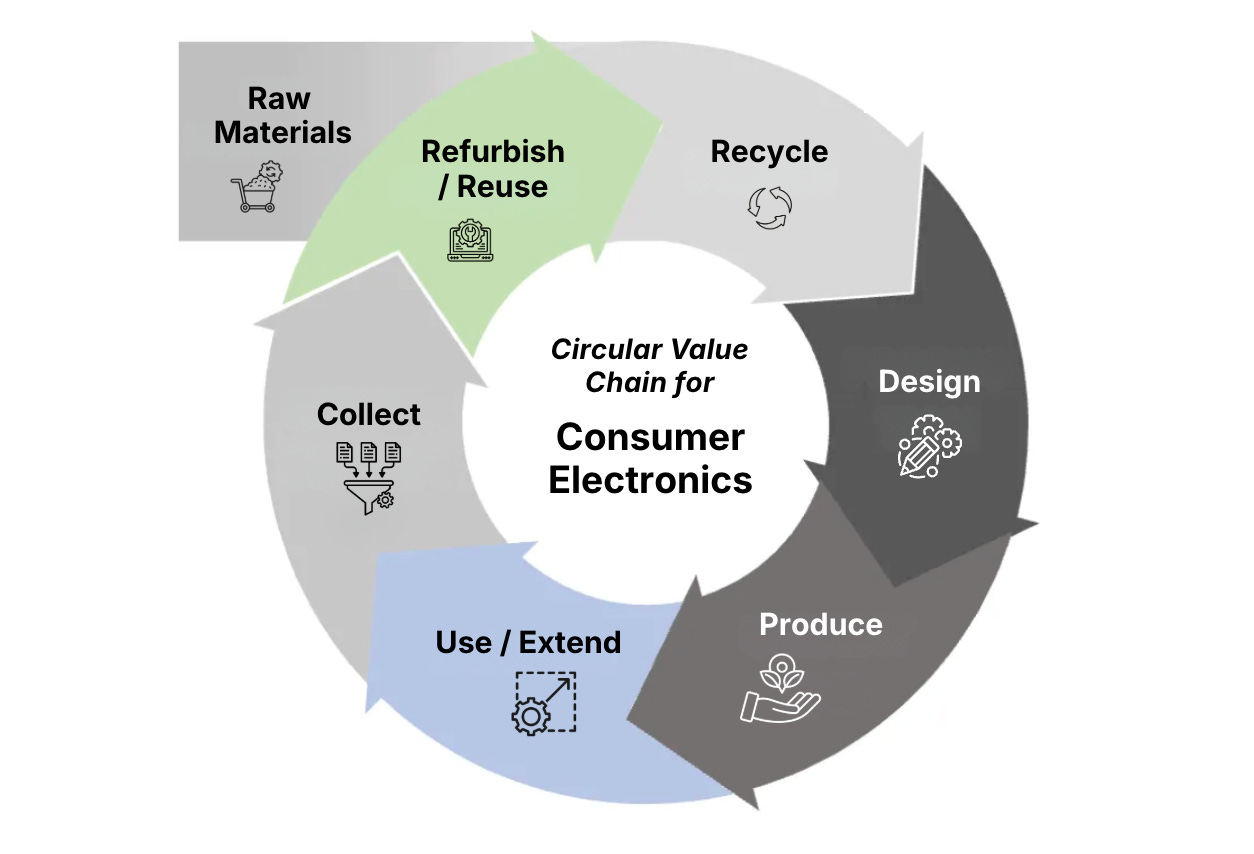
Circularity doesn’t eliminate electronics. It changes how they’re designed, used, recovered, and valued. It’s a model built around using less, owning smarter, and keeping materials in play for as long as possible.
A. Design for longevity
Circularity starts in the design studio, not the landfill
Devices are designed using secondary raw materials, modular components, and repair-friendly architecture. Batteries can be replaced. Screens can be swapped. The same phone, but a completely different fate.
B. Extend the use phase
This is the simplest—and most powerful—form of circularity: use devices longer.
Repair instead of replace. Update software. Care for batteries and charging habits.
No other intervention reduces environmental impact as effectively as extending product life.
C. Collection systems
Circularity only works if devices re-enter the loop.
Collection happens through:
Trade-in programmes
Buy-back kiosks
In-store drop-off points
Community e-waste drives
Without collection, circularity remains a good idea on paper.
D. Refurbishment and reuse
This is where the real impact happens.
Collected devices are tested, repaired, cleaned, and graded to industry standards before being resold.
Refurbishment:
Avoids new manufacturing emissions
Makes technology more affordable
educes e-waste
It is the beating heart of circular electronics.
E. Recycling (the last resort)
If a device truly cannot be saved, recycling ensures materials return to the system rather than landfills.
Metals are recovered. Plastics are separated. Components are extracted where possible.
In circular systems, recycling is the final step, not the default one.
F. Why operators care
For brands and refurb players, circularity isn’t just environmental—it’s economic. Industry observers suggest refurbished devices can achieve healthy margins when quality standards and certification improve consumer confidence. The bigger challenge? Building collection infrastructure and reverse logistics networks that make the model scalable.
Key shift: Circular electronics don’t stop consumption—they make it smarter, slower, and more resource-efficient. Value is preserved instead of destroyed.
4. Why Circular Electronics Feel Invisible
Here’s the honest truth:
You can mend clothes yourself ✔
You can’t repair a motherboard ❌You can upcycle a T-shirt ✔
You can’t DIY a smartphone into something new❌
Electronics circularity is system-led, not consumer-led.
And that’s actually okay, not all circularity needs to be DIY.
What circular electronics needs to work:
Infrastructure you don’t see:
Specialist repairers with certified training
Device graders using industry standards
Secure data-wiping protocols
Certified recyclers with proper equipment
Reverse logistics networks
Testing and quality assurance facilities
E-waste collection compliance (UK’s WEEE regulations, India’s E-Waste Management Rules)
As consumers, we only see a small slice of the loop—trade-ins, drop-offs, refurbished sales. The rest happens quietly in the background.
And that’s okay.
Not all circularity needs to be visible to be powerful.
5. The Closing Thought
So what does this mean for us, as everyday consumers?
If circular fashion is creative and personal, circular electronics are technical and quietly transformative.
One touches your wardrobe. The other reshapes how we live, work, connect, and communicate.
Both matter.
In the next article, we’ll map the different players that make up the circular electronics ecosystem—from collection and refurbishment to resale and recycling—and explore why each one is critical.
Because circularity in electronics isn’t a future concept. It’s already happening, just behind the scenes.
And here’s the small but meaningful shift we can all make:
Use devices longer before upgrading
Repair before replacing
Choose refurbished when possible
Return devices through formal collection systems instead of drawers
Circular electronics doesn’t ask us to become engineers or repair experts. It asks us to pause, question, and participate when the moment comes.
Because sometimes, circularity isn’t about doing more. It’s about doing the next right thing, and letting systems do the rest.
Notes for readers
E-waste: Discarded electronic devices—phones, laptops, chargers, etc.
Refurbishment: Professional-grade repair, testing, data-wiping, and resale to certified standards.
Rare earth metals: Elements like neodymium, dysprosium, and yttrium—difficult to mine, harder to recycle, critical for electronics.
WEEE: Waste Electrical and Electronic Equipment (UK/EU regulations for producer responsibility).
Sources & Further Reading
UN Global E-Waste Monitor 2024 (e-waste volumes, recovery rates, material value)
Apple Environmental Progress Reports (smartphone lifecycle CO₂ data)
Written by Sherry for I Will Circle Back.
If this piece resonated, hit the ❤️ or share it with someone you think would love this.
 | A guest post by
|
Love this perspective! You articulate so well why circular electronics is a critical and complex systemic chalenge we absolutely need to address. Thank you.