
Spotlighting Circular Brands: Part 2
From Mumbai to Sydney to Brasília, three brands are showing us how waste can be reimagined into something functional, stylish, and socially impactful.


Editor’s Note:
Circular fashion is more than just recycling — it’s about creativity, community, and finding new value in what we throw away. In Part 1, we spotlighted I Was A Sari, Lucy & Yak, and Tentree.In this second edition, we turn to three more innovators giving new life to old denim, plastic bottles, and even soda tabs.
Dwij – Giving Second Life to Denim

The Origin Story
In 2018, engineer-turned-entrepreneur Soumya Kalluri founded Dwij in Mumbai, asking: what if discarded denim could live again? Her answer: a brand that transforms post-consumer jeans and post-industrial fabric waste into stylish, durable bags and accessories. The name “dwij” (Sanskrit for “second life”) reflects this philosophy of rebirth.
What Makes It Circular
Every bag starts with waste — old jeans, surplus textiles, and factory offcuts. These are washed, sorted, cut for maximum fabric use, and stitched in-house or by women artisans working from home. Even tiny scraps are repurposed into small accessories or blended with recycled PET felt, ensuring nothing goes to waste.
Why It Matters
Each purchase keeps denim out of India’s overflowing landfills while providing dignified work to local tailors and women artisans. Dwij proves that upcycling can support livelihoods and reduce waste — shoppers aren’t just buying a bag, they’re reducing water, chemical, and energy footprints too.
The Bigger Picture
Dwij shows that sustainable design doesn’t have to be niche or expensive. By creating affordable, stylish accessories, it makes conscious consumption practical in price-sensitive markets like India.
The X-Factor
Every product carries the hidden story of a pair of jeans that might otherwise have been trashed. Backed by an engineer-founder, Dwij’s designs balance aesthetics with rigorous sustainability protocols — from lifecycle analysis to hygiene standards.
Price For Your Pocket?
Totes and backpacks range from ₹1,200–₹3,500 ($15–$40 USD), keeping sustainability accessible to Indian consumers while staying competitive with fast fashion.
My Funky Bags – Sustainability with Style
The Origin Story
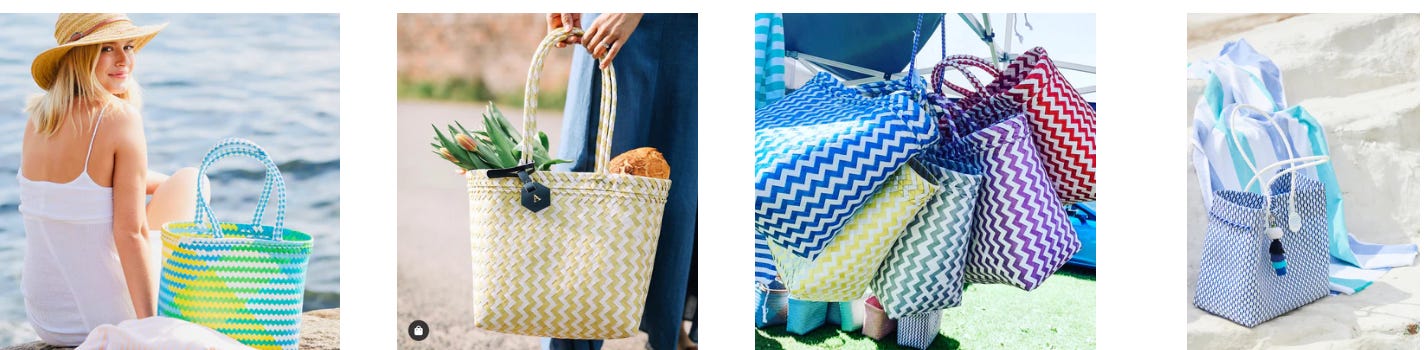
After leaving the corporate world, Molly set out to create something meaningful and discovered the idea of turning discarded plastic bottles into fashion. Partnering with a family business in Asia that collects and cleans plastic waste, she transformed bottles into straps for handwoven bags. After a UK stint, she returned to Australia to launch her sustainable lifestyle store Funky & Green — and My Funky Bags was born.
What Makes It Circular
Straps are made from recycled plastic bottles that are collected, cleaned, and processed. Bags are handwoven in ethical workshops, avoiding glue, machines, or stitching — reducing chemical and energy use while keeping traditional craftsmanship alive.
Why It Matters
Every bag supports women weavers and small family businesses in Asia, ensuring income, skill preservation, and dignity of work. At the same time, plastic bottles are diverted from landfills and oceans into long-lasting fashion.
The Bigger Picture
My Funky Bags shows that sustainability doesn’t have to mean plain or minimal. By using recycled plastic and artisan weaving, they create vibrant designs that are both beautiful and responsible.
The X-Factor
Each bag is funky, colourful, and joyful — a reminder that you don’t have to sacrifice style for ethics.
Price For Your Pocket?
Clutches start at $27 and crossbody bags at $40.
Escama Studio – From Soda Tabs to Showstoppers
The Origin Story
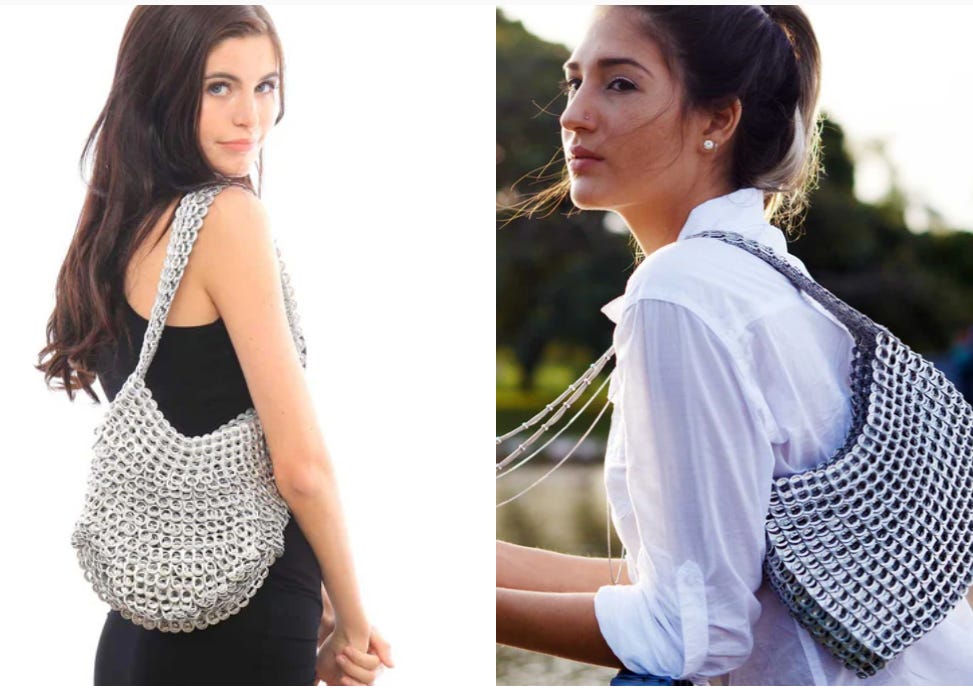
In 2004, Escama Studio was born from a collaboration between California designers and artisan collectives in Brasília, Brazil. Their radical idea? Transforming the humble aluminum soda tab into high-fashion accessories using traditional Brazilian crochet techniques. The result: a chainmail-like textile that’s as bold as it is sustainable.
What Makes It Circular
Each purse or clutch is crafted from hundreds of discarded soda tabs, collected, polished, and hand-crocheted into new life. Even scraps are reused for smaller pieces like coin purses and jewelry.
Why It Matters
Behind each bag are around 60 women artisans who gain fair wages and consistent work. Consumers don’t just buy a bag — they invest in economic independence for women and a second life for aluminum waste.
The Bigger Picture
Escama Studio proves that sustainable fashion doesn’t need to look earthy or minimal — it can be glamorous, urban, and edgy. Their designs bring artisan skill to global fashion markets, rooted in social impact.
The X-Factor
Every bag is unique, handmade, and stitched with Brazilian creativity. The juxtaposition of “trash” into metallic textile embodies resilience and reinvention — turning soda tabs into statement fashion.
Price For Your Pocket?
Mini clutches start at $46, with larger crossbodies and purses ranging from $110–$195 — an accessible alternative to luxury handbags, with added impact.
Closing Note
From second-life denim in Mumbai, to handwoven recycled plastics in Australia, to soda tab couture in Brazil — these brands remind us that circularity is about imagination as much as it is about waste. Which one speaks to you? Share your thoughts — your pick might feature in a future edition of this series.
Stay tuned for Part 3 - more to come!
Researched by Vinita for I Will Circle Back.
If you liked the piece, hit the ❤️ or share it with someone who might find this to be useful.
 |
|