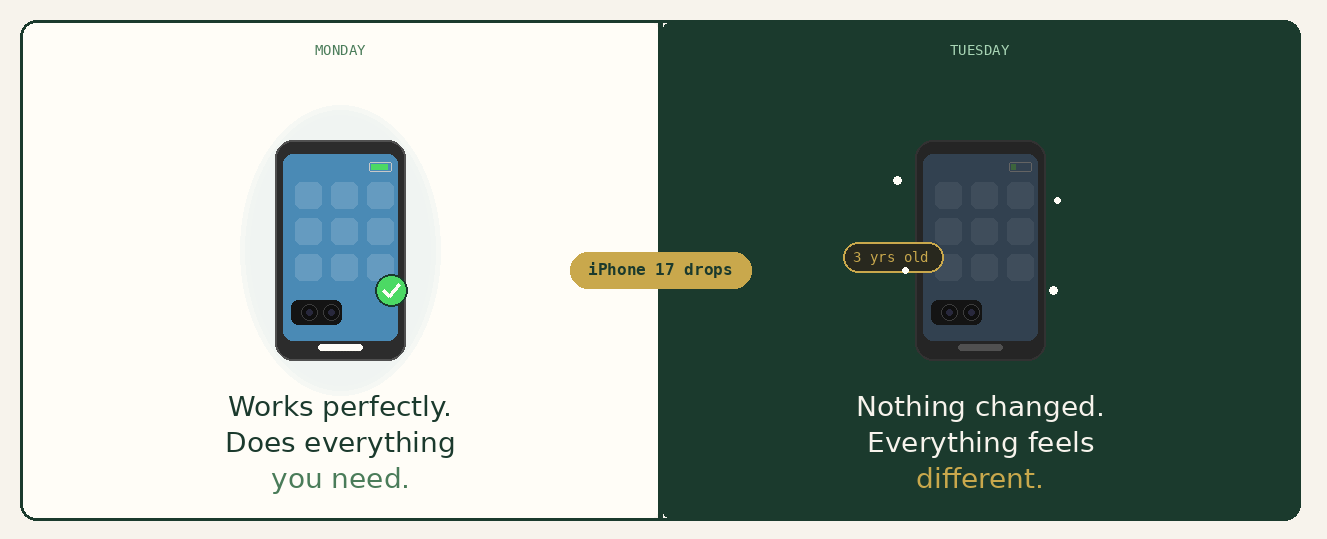
The new iPhone drops. The ads are everywhere. Your friend already has one. And suddenly your perfectly functional phone feels... old.
The camera is basically the same. The battery still works. You haven’t dropped it once. But the pull is real. And most of us cave eventually.
Here’s what nobody tells you: that feeling isn’t entirely your fault. It’s engineered. The two-year upgrade cycle, the carrier deals, the breathless launch events - all of it is designed to make your current phone feel like yesterday’s news, even when it isn’t.
But what if you didn’t upgrade? What if that phone in your pocket had one, two, maybe three more good years in it?
Or what if you upgrade to a new model but instead of buying a brand new phone, you buy refurbished?
How does that sound to you? Did your excitement drop and it suddenly felt like a compromise?
Most people feel that way. And if you just felt it too, that’s the stigma we’re talking about.
Let’s start with that feeling.
“Isn’t Refurbished Just Someone’s Broken Phone?”
Most of us have an instinctive reaction to the word “refurbished.” It sounds like a polite word for “used and broken”. Like buying someone else’s problem with a new sticker on it.
So the question isn’t whether your concerns are valid. They are. The question is: what does refurbished actually mean when it’s done properly?
Let’s start with the basics
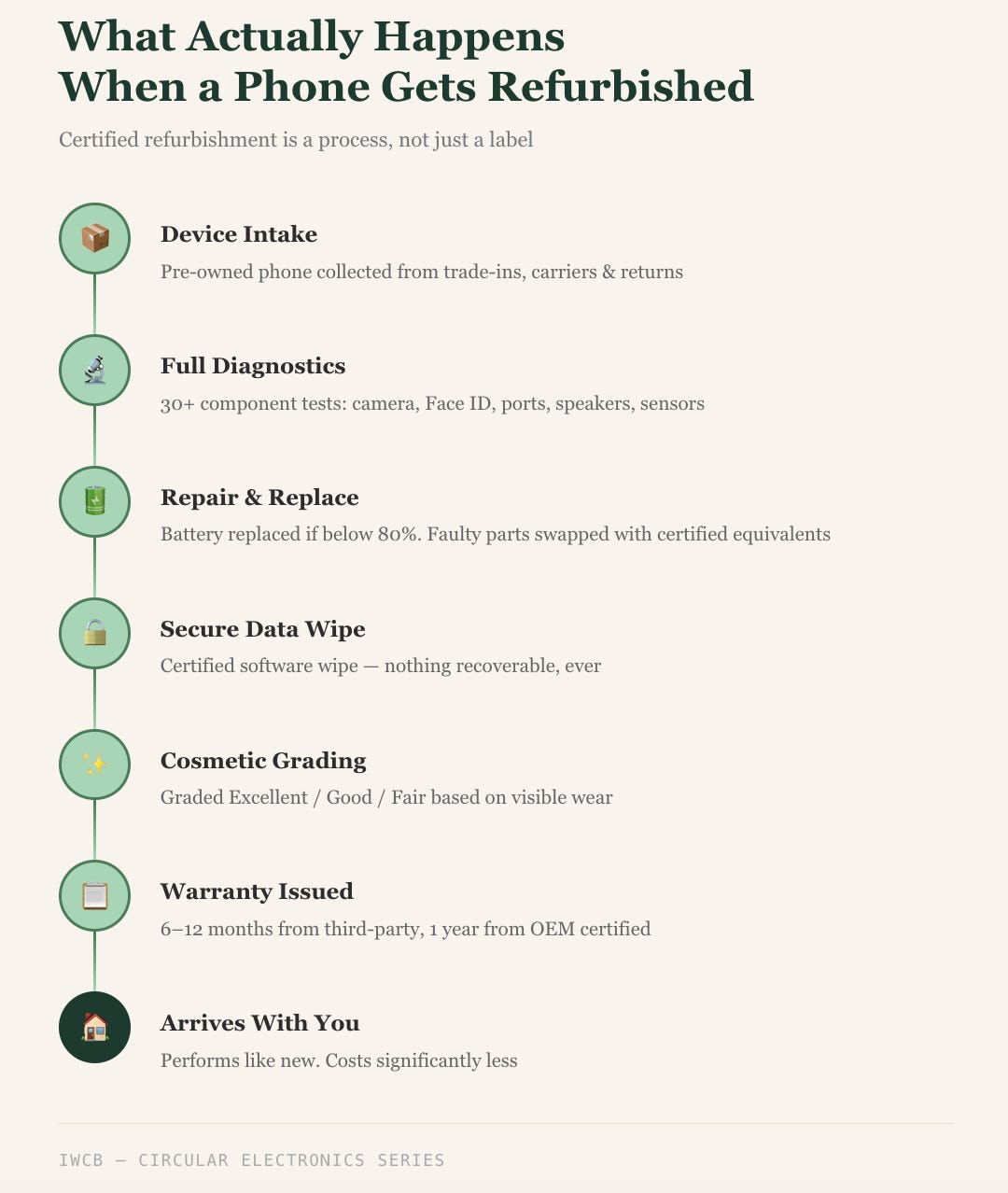
At its core, refurbishment is simple: take a used device, restore it to working condition, and guarantee it performs like new. But “refurbished” isn’t one standard. It’s a process. And when it’s certified, that process is thorough.
So what actually happens? Let’s break it down by the things that matter most and what a proper refurbisher does about it:
Battery health. You don’t want a phone that dies by 3pm. A good refurbisher tests battery capacity and replaces it entirely if it’s below 80%. The best ones give you a brand new battery.
Screen condition. No cracks, no dead pixels, no weird discoloration. A refurbished phone should look pristine when you turn it on. Minor scratches on the back are fine (that’s why grading exists - Excellent vs. Good vs. Fair, related to the cosmetic condition of the phone). But the screen needs to be right.
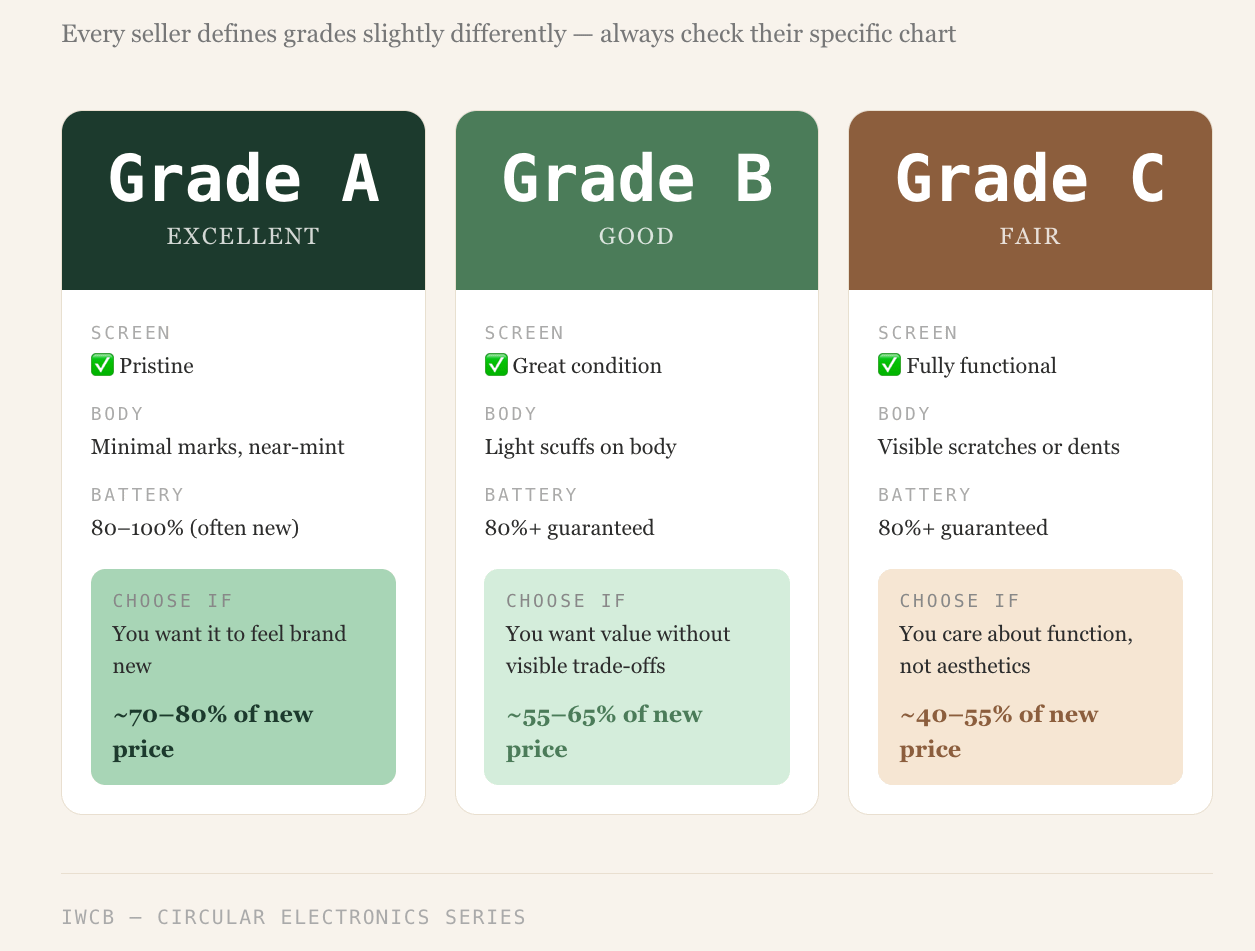
What the grades actually mean:
Excellent (Grade A): Near-mint condition. Looks almost new, minimal signs of use. Screen is pristine.
Good (Grade B): Light scratches or scuffs on the body. Screen still in great condition. Fully functional.
Fair (Grade C): Visible wear and tear. Deeper scratches, maybe small dents. Still works perfectly, just looks used.
Note: Every seller defines grades slightly differently, so always check their specific grading chart before buying.
Whether everything functions. Camera, speakers, Face ID, charging port, buttons. Does it all work the way it should? A proper refurbishment runs 30-plus diagnostic tests on every single component before the phone gets packaged.
Your data. This is a big one. Your old data doesn’t just get deleted. It gets securely wiped using certified software so nothing is recoverable. Ever.
So what certified refurbished means is:
Full diagnostic testing.
Failed parts get replaced with genuine or certified equivalents.
Cosmetic grading so you know what you’re getting.
And a warranty backing it all up.
When you know what the process actually involves, “refurbished” stops sounding like a compromise.
The stigma is fading, particularly among younger buyers who see refurbished less as “someone’s old phone” and more as the obvious smart choice. Buying refurbished is becoming what buying vintage clothing was a decade ago. Once considered second-best. Now considered savvy.
Who’s doing the Refurbishing?
Now let’s understand who does it. Because not all refurbishers operate the same way. Broadly there are three types of refurbishers:
OEM Certified (Apple, Samsung) is the gold standard. Genuine parts, new battery, new outer shell and a fresh box with one-year warranty. You’d barely know the difference from new. You’ll pay around 75-80% of the new price for that peace of mind.
Third-party marketplaces like Back Market(UK, EU, US) , MusicMagpie(UK),and Swappa (US). Independent refurbishers vetted by marketplaces. Solid quality, 6-12 month warranties, 50-70% of new price. This is where most people land.
Seller refurbished on eBay or Amazon are the wild west. Prices are lowest but “Refurbished” here can mean almost anything and a 30-day warranty is not reassuring. If you know phones and know what to look for, you can find genuine deals. If you don’t, buy from someone who stands behind their work.
IWCB Tip: Before buying anywhe`re: check minimum battery health (80%+), warranty length and return policy. The questions you ask matter as much as where you buy.
One Year Makes More Difference Than You Think
Keeping your phone for just one extra year does more for the planet than almost any other consumer decision you can make. More than the reusable coffee cup. More than the organic cotton tote. More than most of the things we actually think about.
The reason is simple. As we covered inCircular Electronics 101, the environmental cost of your phone is almost entirely front-loaded. The mining, manufacturing and shipping all happen before the phone reaches your hands. Every extra year you use it spreads that cost further. Every early upgrade restarts the clock.
Meanwhile, choosing refurbished over new means one less device manufactured, one less round of mining, one fewer phone in a landfill or a drawer somewhere.
It’s not about being perfect. It’s about recognising that the most sustainable phone is the one already in your hand.
It Always Comes Down to Money (And Lifestyle)
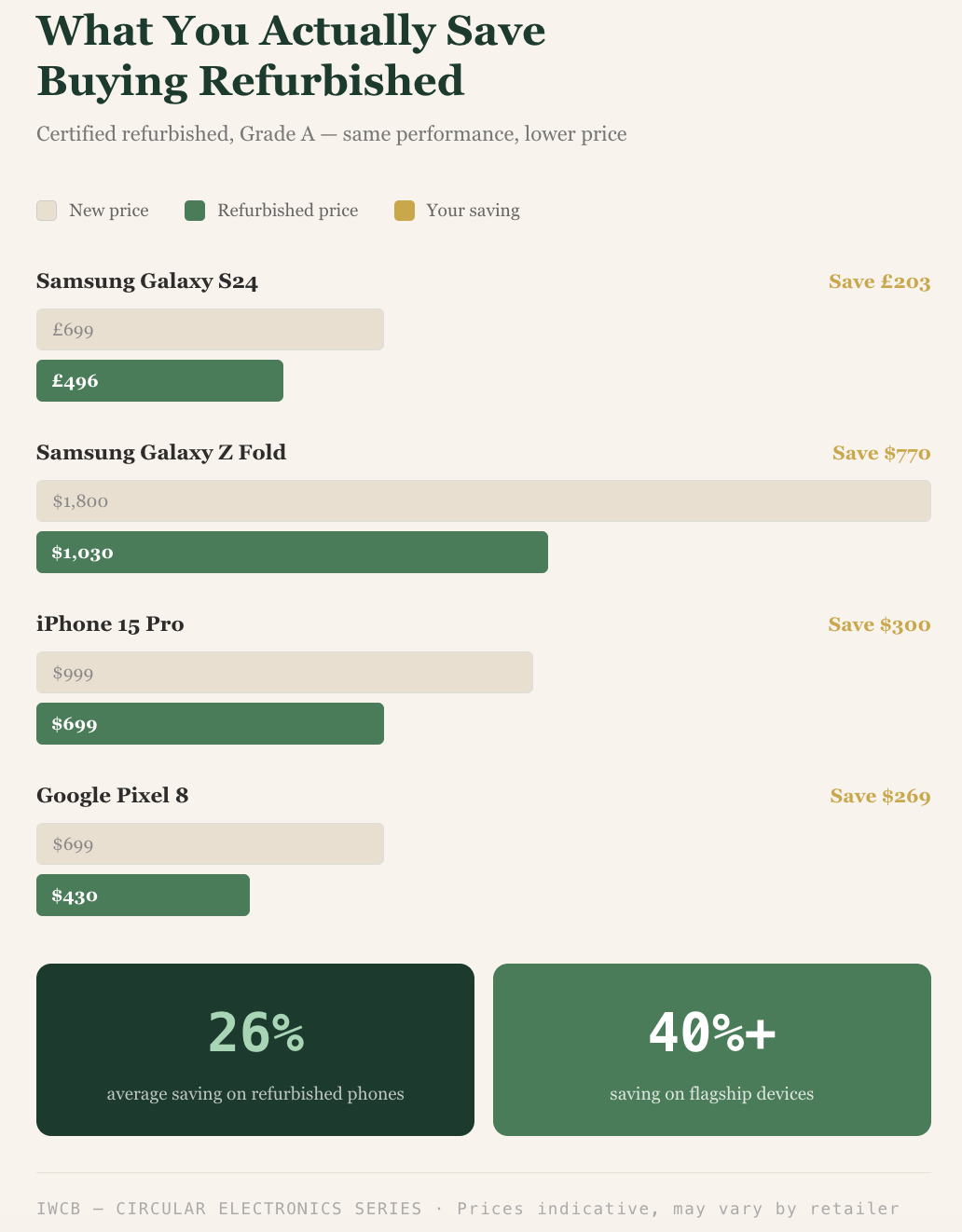
Sustainability is easier to care about when it’s also the cheaper option. With refurbished phones, it genuinely is.
There’s a lifestyle calculation worth doing honestly, though. If you rely on the latest camera for content creation, or your work genuinely requires cutting-edge features, buying new might make sense. No judgment.
But most of us use our phones to scroll, message, take the occasional photo and make calls. For that, a phone from two years ago is completely fine. “Pre-owned phones can be indistinguishable from brand-new ones if they’re properly refurbished,” says Rich Fisco, head of electronics testing at Consumer Reports.
Before any upgrade, ask yourself one question: what does my current phone actually not do that I need it to do? If the answer is “nothing really, it’s just a bit slow sometimes,” that’s a software update or a battery replacement, not a new phone.
How to Resist the Upgrade Itch
Ask the real question first. Write down three things your current phone genuinely can’t do. Not “it’s a bit slow” or “the camera could be better.” Three actual things you need and don’t have. If you can’t name three, you probably don’t need a new phone.
Replace the battery before you replace the phone. Battery degradation is the number one reason people feel their phone is dying. Apple charges £95 for an out-of-warranty battery replacement. A local repair shop often charges less. A new phone costs ten times that. Try the battery first.
Give your phone a fresh start. A factory reset and software update can make an older phone feel genuinely new. Clear the clutter, delete what you don’t use, free up storage. You might be surprised how much life is still in it.
If you’re going to upgrade, go one generation back.. The phone from two years ago has an excellent camera, a fast processor, and years of software support ahead of it, at a fraction of the current flagship price. Check Back Market or Apple’s certified refurbished store before looking at anything new.
Before You Hit Buy: The Case for Sleeping On It
We don’t need everyone to live perfectly sustainable lives. We need more people making better choices where they can.
So if you’re thinking about upgrading, pause.
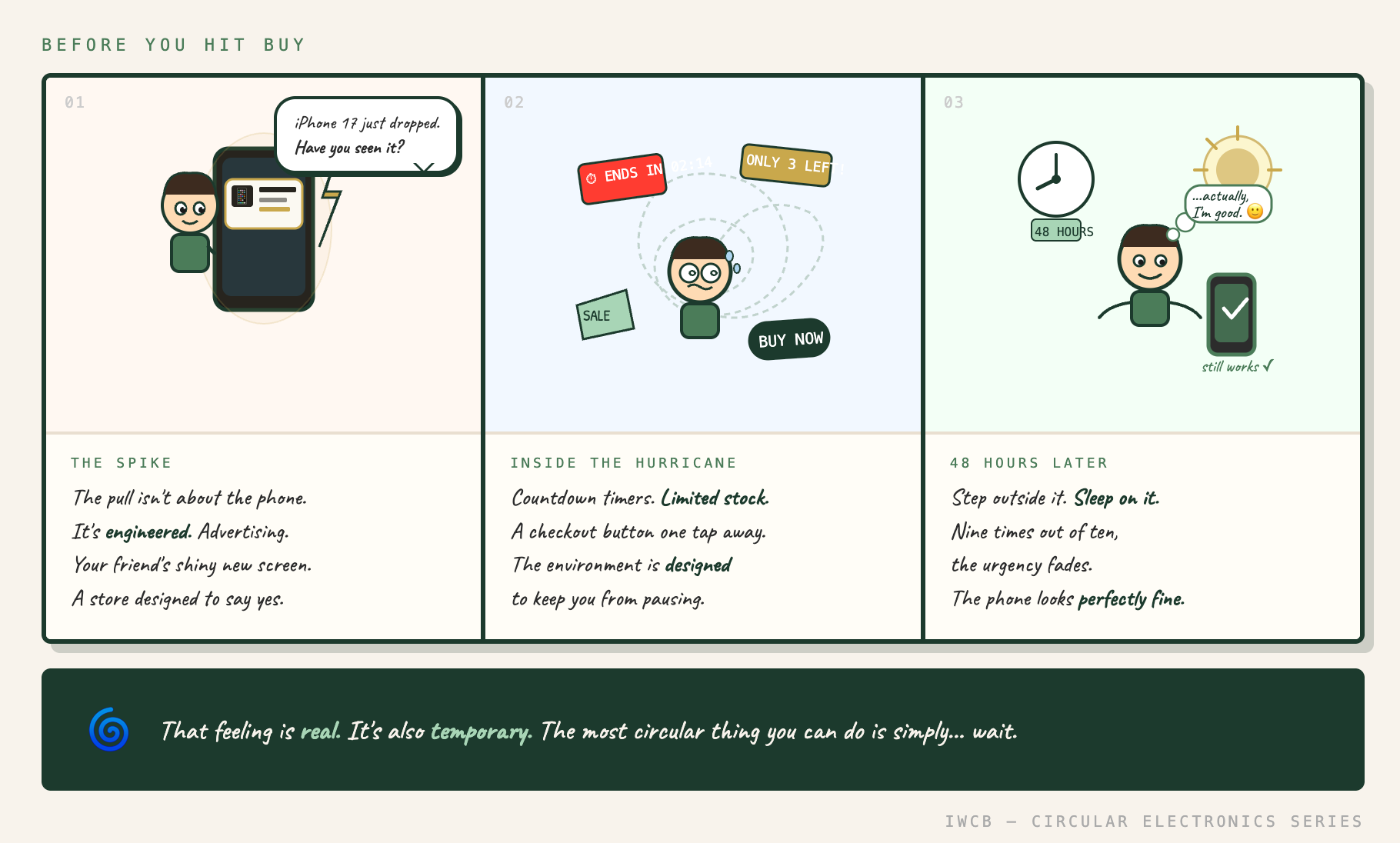
The pull you feel when a new phone drops isn’t really about the phone. It’s a spike — triggered by advertising, by seeing someone else’s new device, by standing in a store with flashy things on every wall and a sales assistant asking which colour you prefer before you’ve decided whether you want it at all. That feeling is real. It’s also temporary.
Impulse purchases feel urgent in the moment and optional 48 hours later. The buying environment is designed to keep you inside the hurricane, with countdown timers, limited stock warnings and a checkout button one tap away.
Step outside it. Sleep on it. Literally.
If you still want the upgrade two days later — after checking what your current phone genuinely can’t do, after looking up what a battery replacement costs, after pricing certified refurbished on Back Market or your manufacturer’s page — then buy it. That’s an informed choice.
Actually did the maths? Drop the numbers in the comments.
But nine times out of ten the urgency fades. The phone in your pocket starts looking perfectly fine again.
And that’s the most circular thing you can do.
Next up: we map the full circular electronics ecosystem, who the players are, where the money is, and where the real opportunities are being built.
Written by Sherry for I Will Circle Back. If this piece resonated, hit the ❤️ or share it with someone you think would love this.
This feels like a great example of how expectations have shifted more than the technology itself. Phones are still very capable, but the way we use them, for everything, makes any slowdown or battery dip feel unacceptable. It’s less about the phone being “bad” and more about how much we’re asking it to do all the time.



This feels like a great example of how expectations have shifted more than the technology itself. Phones are still very capable, but the way we use them, for everything, makes any slowdown or battery dip feel unacceptable. It’s less about the phone being “bad” and more about how much we’re asking it to do all the time.